The Price of Inequality: How Today's Divided Society Endangers Our Future by Joseph E. Stiglitz
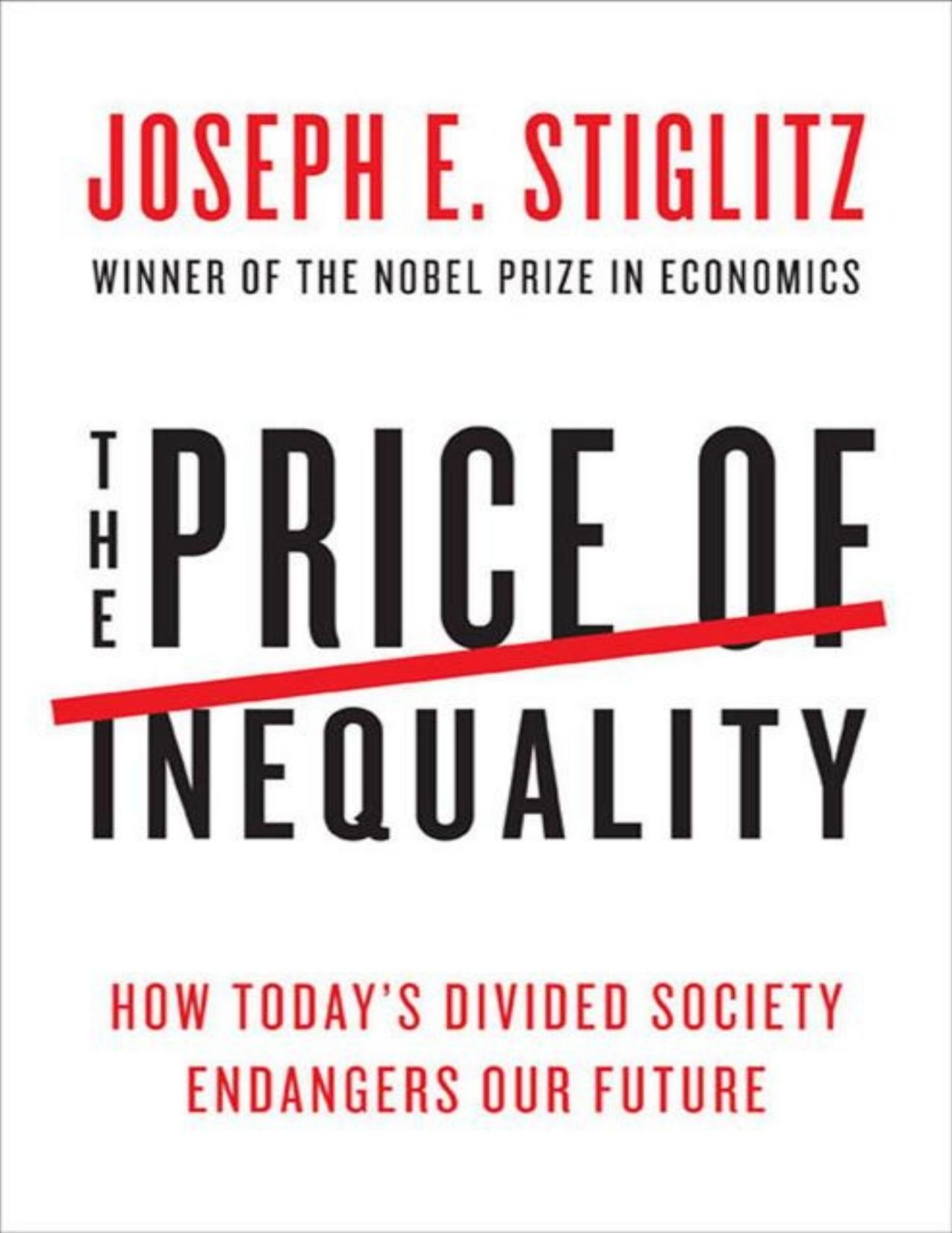
Author:Joseph E. Stiglitz
Language: eng
Format: mobi, epub, pdf
Tags: Non-Fiction, Sociology, Politics, Business, History
ISBN: 9780393088694
Publisher: W. W. Norton & Company
Published: 2012-06-11T00:00:00+00:00
UNMASKING THE DEFICIT AGENDA: PRESERVING AND EXTENDING INEQUALITIES
It might seem strange, in a country where tax rates at the top are already lower than they are in most of the other advanced industrial countries, to have a deficit reduction program emphasize the reduction of top tax rates and tax rates on corporations, but that’s exactly what the Bowles-Simpson Deficit Reduction Commission did.24 It proposed limiting the top marginal tax rate to between 23 percent and 29 percent, part of its broader agenda of limiting the size of government, capping overall tax revenues at 21 percent of GDP. Indeed, about three-fourths of the deficit reduction is achieved by cutbacks in government spending.
Reagan supply-side economics, which held that lowering tax rates would increase economic activity, so much so that tax revenues would actually increase, has (as we noted in chapter 3) been disproved by what happened after both the Bush and the Reagan tax cuts. Today individual tax rates are much lower than they were in 1980, suggesting that further reductions in tax rates would lower tax revenues even more.
The argument that the corporate tax rate should be lowered (to between 23 percent and 29 percent, from the current 35 percent)25 was even less convincing, though the Bowles-Simpson commission’s proposals to close the myriad loopholes, if actually implemented, would mean that many corporations would pay more taxes even though the official rate was lowered. We noted in chapter 3 that the effective tax rate—the fraction of their income that corporations actually pay in taxes—is much less than 35 percent, with some of the country’s premier corporations, like GE, paying no taxes. But while there is a compelling case for closing the loopholes, even focusing simply on investment and job creation, there was little case for an across-the-board lowering of the corporate tax rate. After all, with the tax deductibility of interest, the tax lowers the cost of borrowing and the return proportionately. There is no adverse effect on investment for any investment financed through borrowing, and once one takes into account the favorable rates at which capital could be depreciated (businesses are allowed to deduct from their income an amount to reflect the fact that their machines are wearing out), the tax code actually encourages investment.26 If the commission was concerned about the tax’s effect on investment, there were more precise ways to tweak the tax code than an across-the-board cut: it could have suggested lowering the tax on firms that created jobs and invested in America and raising taxes on those that didn’t. Such a policy would raise revenues and provide incentives for more investment and job creation in the United States.
Each of the deficit reduction groups sought to address distortionary aspects of the tax code—provisions, many of them deliberately placed by special interests, that encourage specific sectors in the economy. No group, however, suggested a frontal attack on corporate welfare and the hidden subsidies (including to the financial sector) that we’ve stressed in this book, partly because, as we saw
Download
The Price of Inequality: How Today's Divided Society Endangers Our Future by Joseph E. Stiglitz.epub
The Price of Inequality: How Today's Divided Society Endangers Our Future by Joseph E. Stiglitz.pdf
This site does not store any files on its server. We only index and link to content provided by other sites. Please contact the content providers to delete copyright contents if any and email us, we'll remove relevant links or contents immediately.
International Integration of the Brazilian Economy by Elias C. Grivoyannis(106930)
The Radium Girls by Kate Moore(12003)
Turbulence by E. J. Noyes(8008)
Nudge - Improving Decisions about Health, Wealth, and Happiness by Thaler Sunstein(7678)
The Black Swan by Nassim Nicholas Taleb(7087)
Rich Dad Poor Dad by Robert T. Kiyosaki(6576)
Pioneering Portfolio Management by David F. Swensen(6275)
Man-made Catastrophes and Risk Information Concealment by Dmitry Chernov & Didier Sornette(5981)
Zero to One by Peter Thiel(5767)
Secrecy World by Jake Bernstein(4727)
Millionaire: The Philanderer, Gambler, and Duelist Who Invented Modern Finance by Janet Gleeson(4448)
The Age of Surveillance Capitalism by Shoshana Zuboff(4267)
Skin in the Game by Nassim Nicholas Taleb(4224)
The Money Culture by Michael Lewis(4174)
Bullshit Jobs by David Graeber(4162)
Skin in the Game: Hidden Asymmetries in Daily Life by Nassim Nicholas Taleb(3973)
The Dhandho Investor by Mohnish Pabrai(3743)
The Wisdom of Finance by Mihir Desai(3720)
Blockchain Basics by Daniel Drescher(3564)
